Advanced engineering concepts for the DSP2030 futuristic solar pyramid project. Combining renewable energy, smart agriculture, sustainable infrastructure, and iconic Dubai architecture.
Estimated Height
Pyramid Base Width
Base Surface Area
Total Development Area
Solar Exterior Surface
Clean Energy Operation
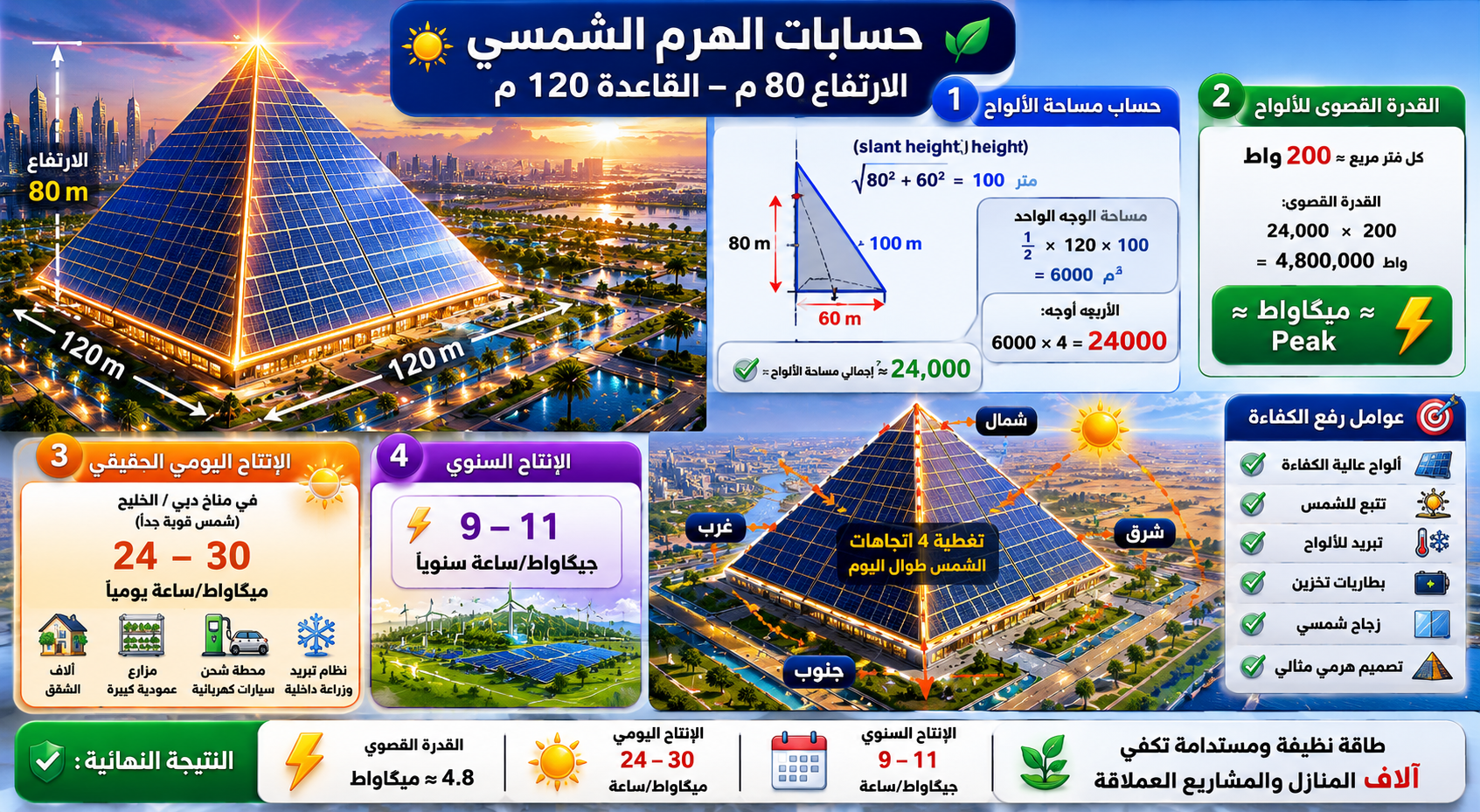
The pyramid exterior is fully covered with advanced solar panels designed to maximize clean renewable energy production.
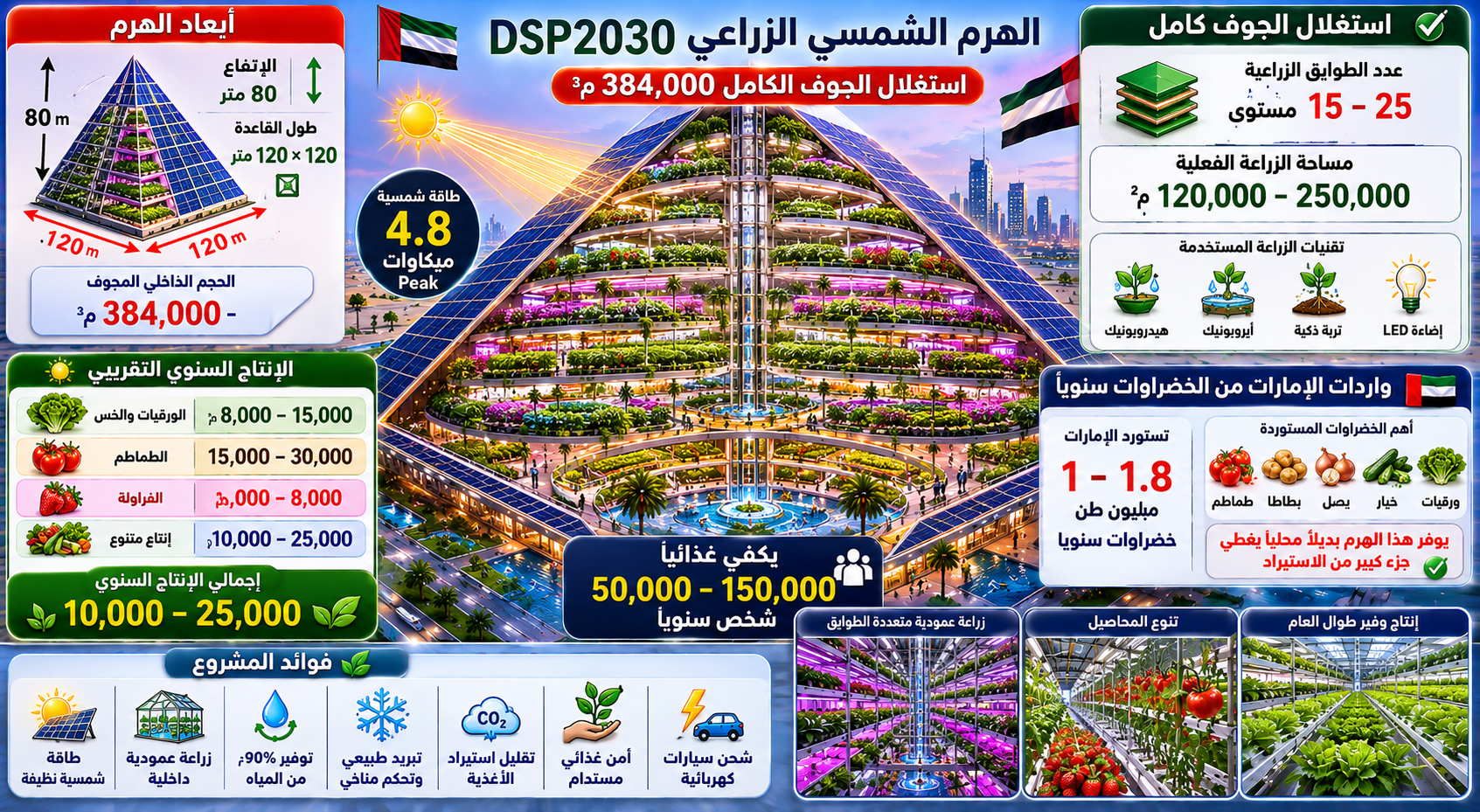
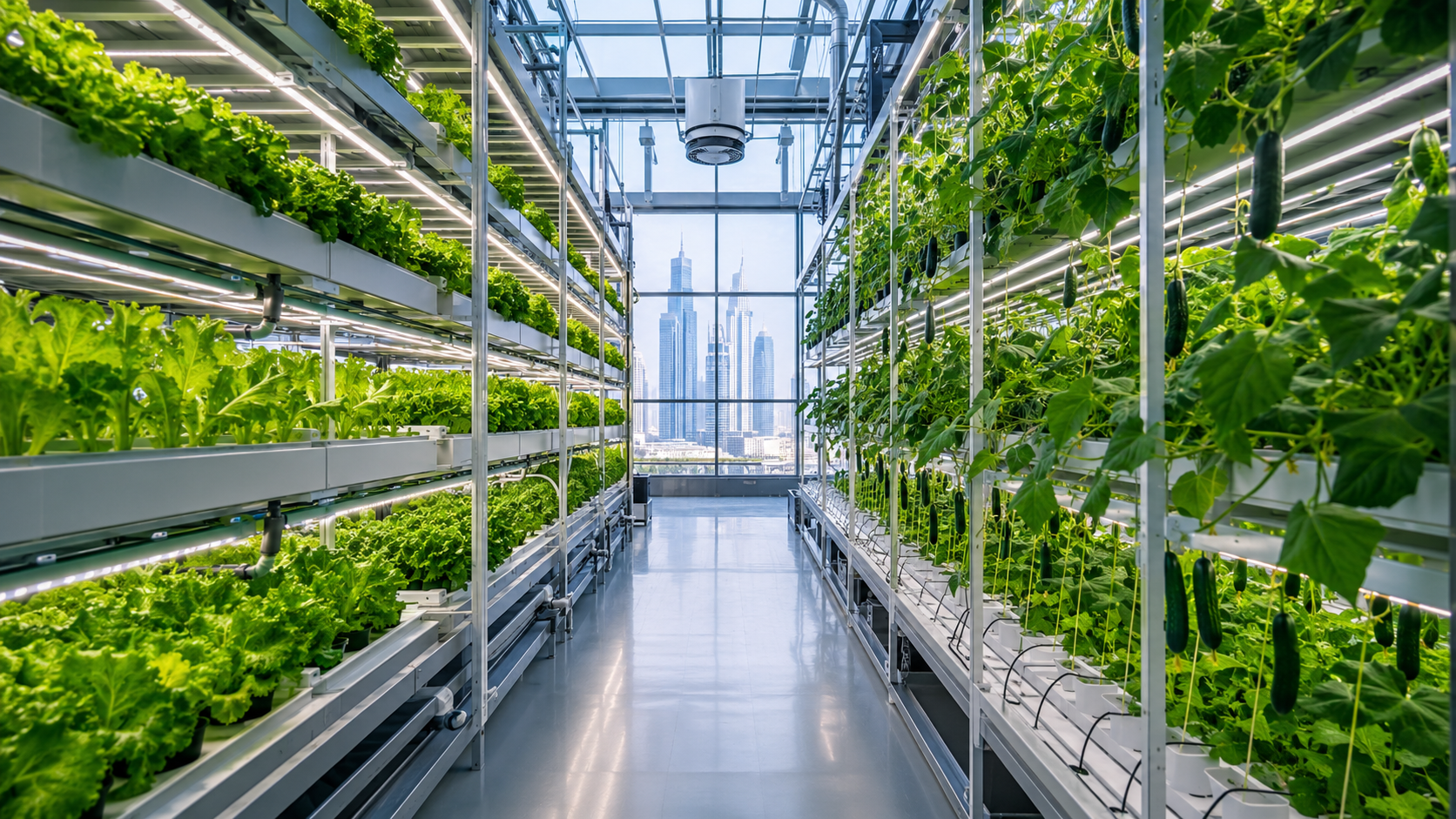
Multi-level indoor farming systems with smart glass environments for sustainable food production and future agriculture.
Integrated electric vehicle charging infrastructure surrounding the pyramid to support future smart mobility systems.
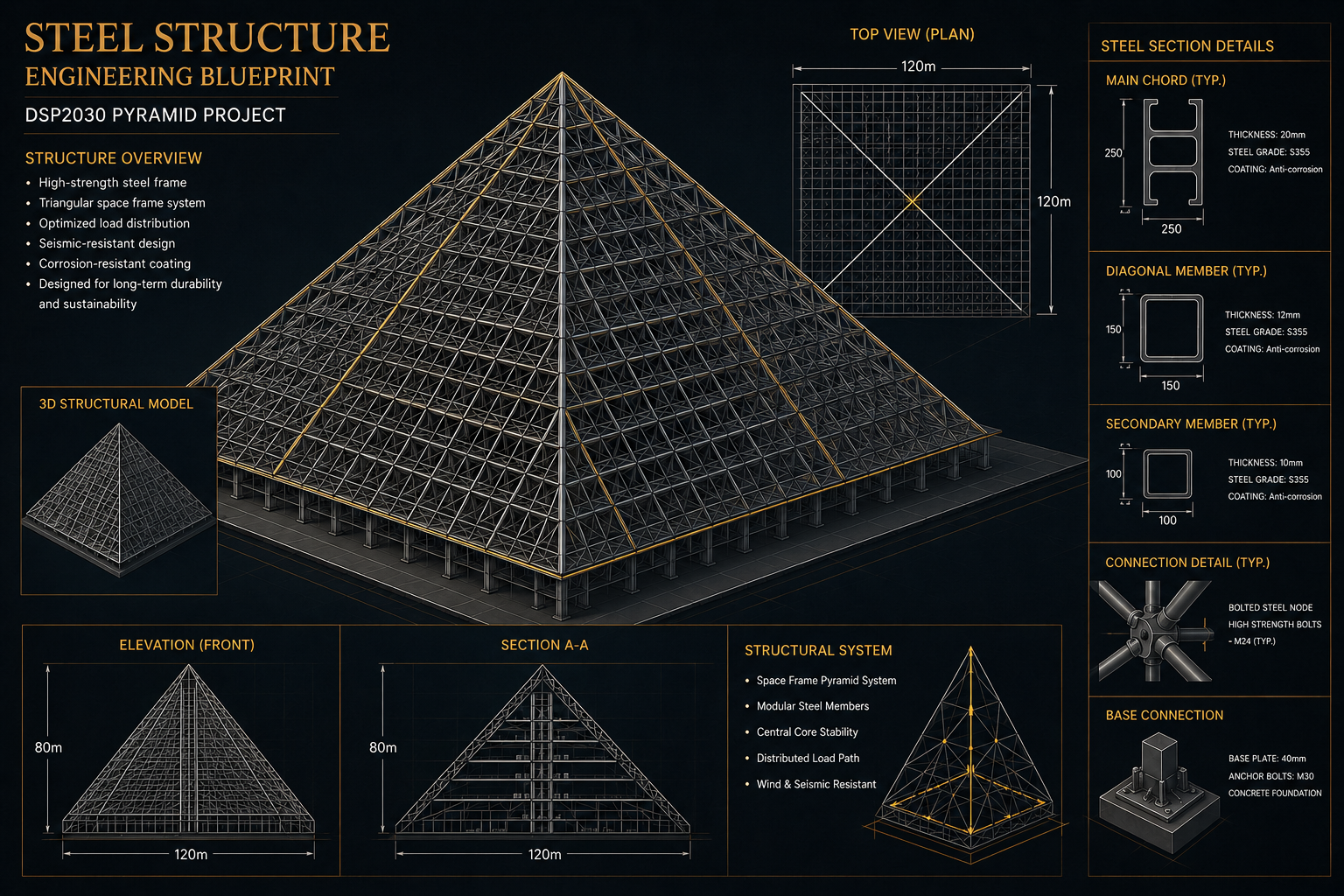
Advanced steel structural systems combined with heat-resistant glass and intelligent environmental control technologies.
Smart water recycling systems designed for efficient sustainability and reduced environmental impact.
Integrated AI systems for energy optimization, smart monitoring, and automated environmental management.
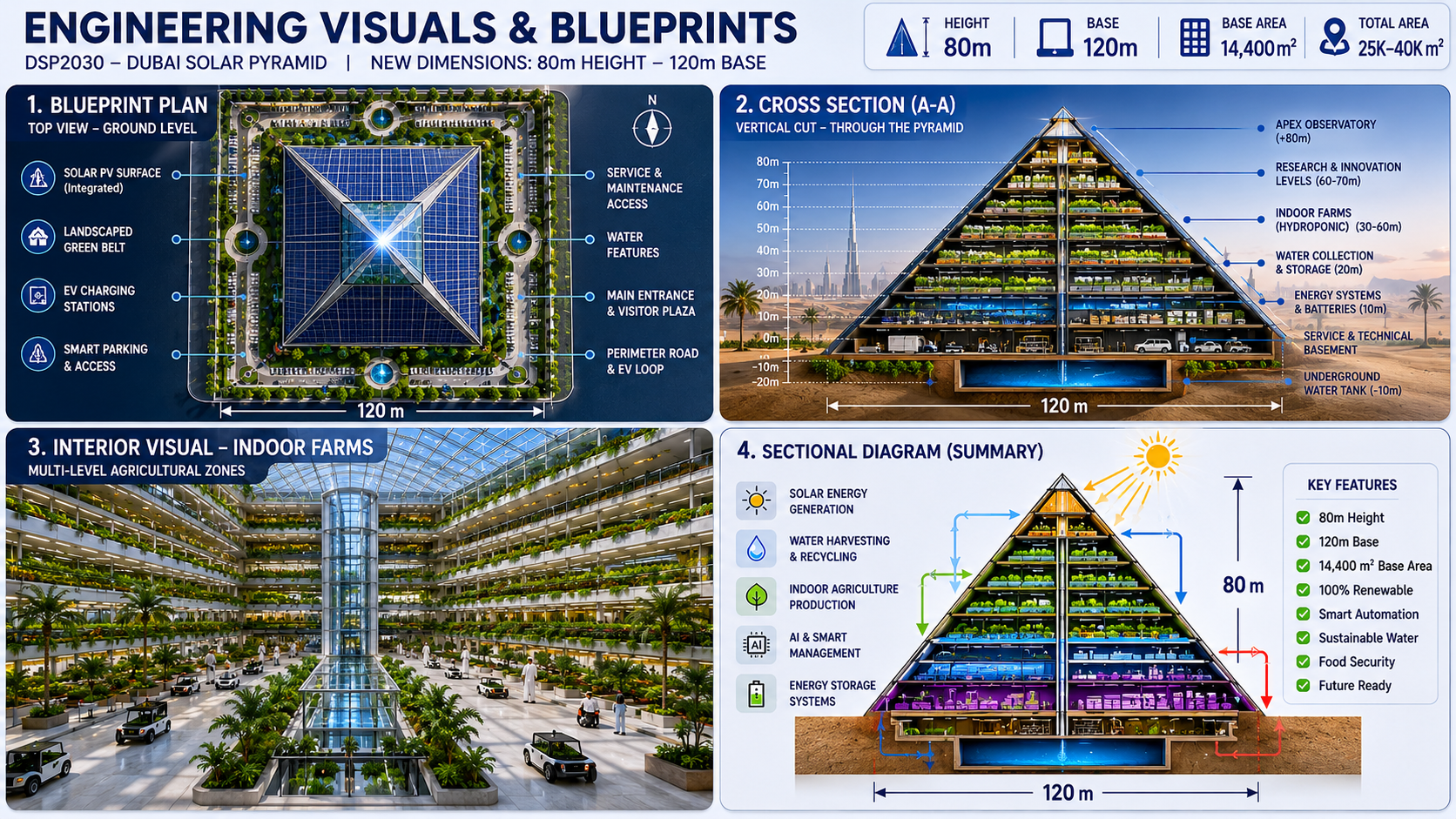
A conceptual engineering blueprint showing the pyramid structure, solar exterior surfaces, internal farming levels, and service zones.
The internal structure is divided into multiple levels for smart agriculture, research spaces, energy systems, and visitor circulation.
Smart cooling and ventilation systems are designed to maintain stable interior temperatures while reducing energy consumption.
The surrounding ground level includes smart parking, electric vehicle charging, and organized visitor access points.
The pyramid exterior is designed to generate renewable solar energy through high-efficiency photovoltaic panel systems integrated across all sides.
Advanced battery storage infrastructure supports continuous energy availability and optimized smart-grid management systems.
DSP2030 aims to reduce environmental impact through renewable energy, water recycling, smart agriculture, and intelligent building technologies.
Integrated filtration and recycling systems provide sustainable water usage for agriculture, cooling, and operational efficiency.
Indoor climate-controlled farming systems support future food production while minimizing land and water consumption.
AI-powered monitoring systems optimize energy distribution, cooling efficiency, environmental stability, and building operations.